AI Co-Clinician Initiative Aims To Revolutionize Medical Diagnostics
By 813 Staff
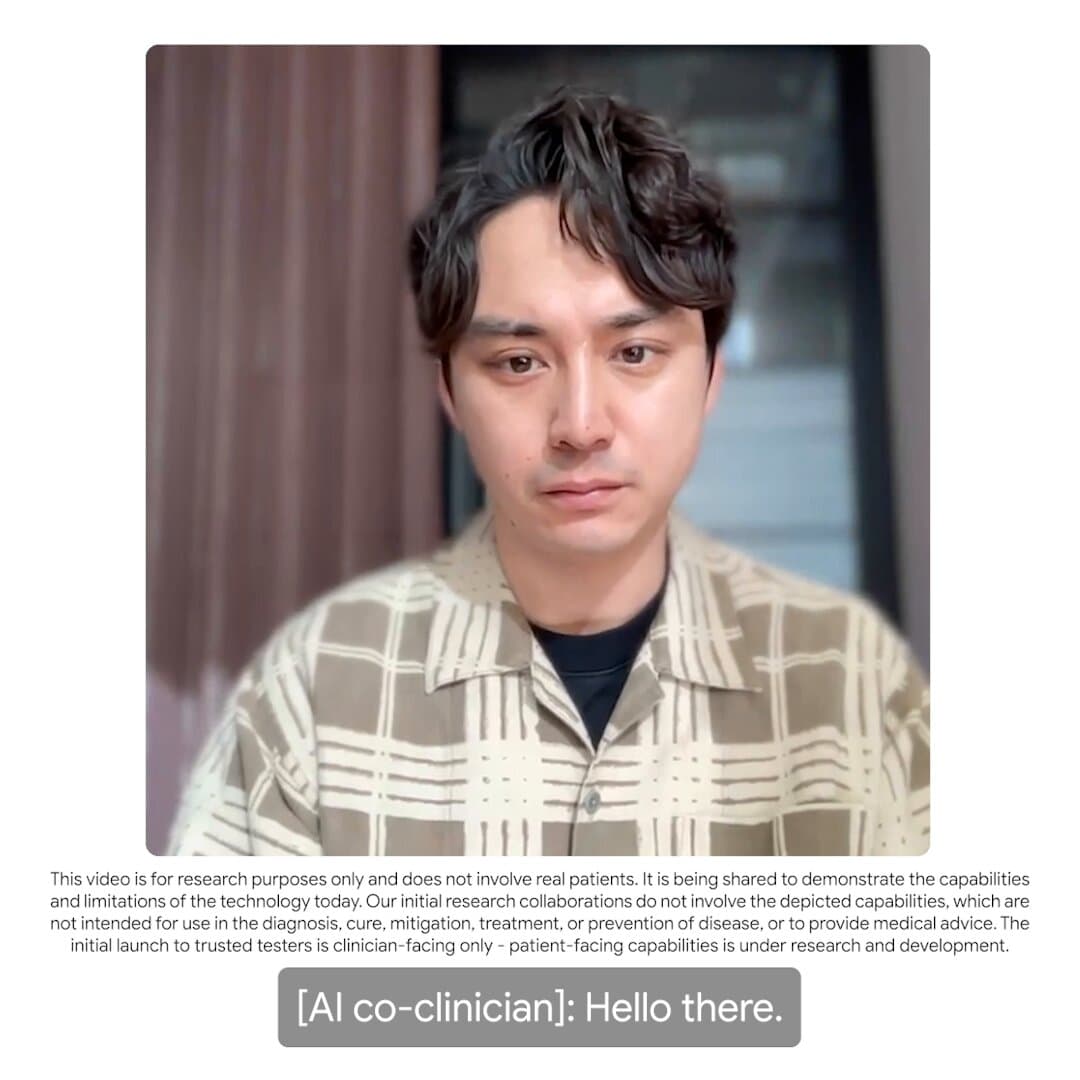
A major product shift is underway — AI Co-Clinician Initiative Aims To Revolutionize Medical Diagnostics, according to Google DeepMind (@GoogleDeepMind) (on April 30, 2026).
Source: https://x.com/GoogleDeepMind/status/2049867061279457761
The race to embed multimodal AI into clinical workflows is intensifying, and Google DeepMind is now making its move, albeit with the kind of cautious fanfare that signals a very long runway ahead. On April 30, 2026, @GoogleDeepMind publicly unveiled “AI co-clinician,” a new research initiative designed to explore how a single model can ingest and reason across a patient’s full medical profile—everything from lab results and radiology scans to genomic data and clinical notes. But internal documents show that this is less a product launch and more a strategic positioning memo for the next phase of healthcare AI.
The initiative is explicitly a research project, not a product. Engineers close to the project say the system is built on a modified version of DeepMind’s Gemini architecture, trained on multimodal clinical data sources that remain largely siloed in existing hospital systems. The core challenge, according to researchers, is not just model performance but integration: most hospitals still rely on fragmented electronic health records that do not natively support the streaming of diverse data types into a single inference pipeline. The rollout has been anything but smooth; early internal tests reportedly struggled with the temporal alignment of lab trends versus imaging snapshots, a problem that has plagued clinical AI for years.
What makes this announcement worth watching is the framing. By labeling it a “co-clinician” rather than a diagnostic tool, DeepMind is signaling a regulatory path that avoids the high bar of autonomous decision-making. This is an assistant designed to surface patterns, not generate orders. Why it matters for the reader is straightforward: the largest provider of general-purpose AI is now explicitly designing for medicine’s most difficult interoperability problem. If DeepMind can solve the multimodal ingestion puzzle, it unlocks a layer of predictive insight that no single diagnostic tool currently offers.
What happens next is uncertain. DeepMind has not shared a timeline for external validation studies or clinical deployment. The project remains in the sandbox, and sources indicate the team is currently negotiating access to de-identified hospital datasets outside of Google’s own health subsidiary. For now, the medical community is left watching a high-stakes research project that could define how—and whether—multimodal AI enters the bedside.
Source: https://x.com/GoogleDeepMind/status/2049867061279457761